Keeping Identity Strong Through Culture and Community
Culture is the heartbeat of identity. At Narang Bir-rong, we know every Aboriginal and Torres Strait Islander child deserves to grow up with a deep sense of belonging, rooted in their Country, family, traditions and community.
Why Culture Matters
For children and young people in our care, culture is more than heritage, it is strength, identity, and connection. Staying connected to culture builds emotional well-being, resilience, and self-worth. It helps them know who they are, remain linked to family and Country, and carry pride as they move within their community and the wider world.
Our Promise
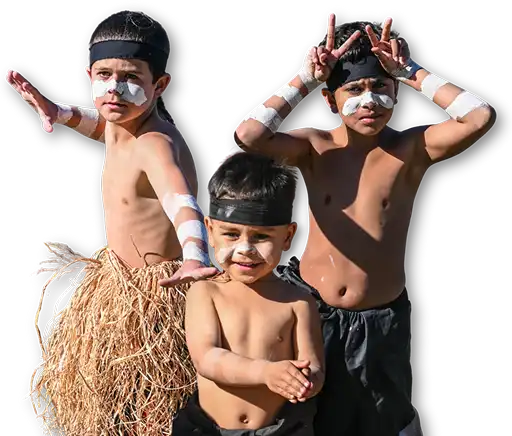
At Narang Bir-rong Aboriginal Corporation, we commit to honouring culture in all we do. We aim to
Maintain and nurture connections to family, community, language, Country and traditions.
Work with Elders, knowledge holders and cultural custodians to guide our programs and ensure authenticity.
Embed culture into everyday life - through ceremonies, art, storytelling, language and celebrations.
Support cultural learning for carers and children, so cultural knowledge is shared, respected and kept alive.
How We Enable Cultural Connections
We provide concrete supports so that cultural identity isn’t sidelined, but central. These include
- Offering access to cultural mentoring, language programs, events, ceremonies, workshops and cultural activities.
- The introduction of a Family History Research Worker, supporting extensive research and family history findings now provided to all children and young people within our programs.
- Working with families and Community Elders to build safe, respectful relationships and cultural consistency.
- Matching children with carers who understand their cultural background, or facilitating kin and community placement wherever possible.
- Providing carers with training, resources and support to understand Aboriginal and Torres Strait Islander cultures, trauma, grief and connection to Country.
- Staff cultural development days to build knowledge, strengthen cultural understanding, and ensure culturally safe practices.
What Culture Looks Like in Practice
Here are examples of Cultural Connections in action
Connection to Country
Time on Country, understanding place names, landscapes, maintenance of cultural sites, caring for land and water.
Family & Kinship
Keeping strong ties with family, extended family and kin; ensuring visits, cultural responsibilities, and relationships remain intact.
Language & Song
Learning and speaking their language, sharing stories for Country, participating in songlines and dance.
Ceremonies & Traditions
Attending, observing, or leading ceremonies; connecting with cultural protocol; knowing tribal or clan histories.
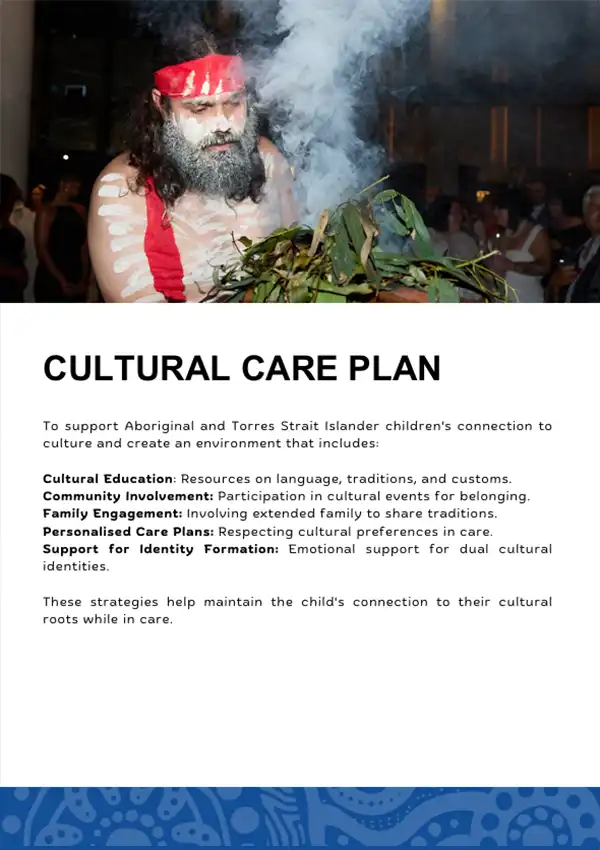
Our Cultural Care Plan Booklet documents each child or young person’s cultural identity, including their mob, totems, Country, language, ceremonies and history. They also include information about biological parents, siblings and extended family, a family history tree, a family and community consultation chart, photos, and connections to local Aboriginal organisations and cultural activities to support ongoing connection to culture, community and kinship.

Supporting Carers & Community
We know carers play a vital role in helping children to stay culturally connected. We support carers by:
Providing cultural training and guidance.
Sharing tools and resources for integrating cultural practice into daily life.
Facilitating connections with Community Elders and cultural mentors.
Offering support in navigating challenges such as balancing culture, education and modern life.
Strengthening Identity. Fostering Belonging.
Culture is a path to belonging. By honouring cultural connections, we help children and young people feel secure, strong, and proud of who they are. At Narang Bir-rong Aboriginal Corporation, we walk with families, carers and communities to ensure culture continues guiding, teaching, and uplifting.